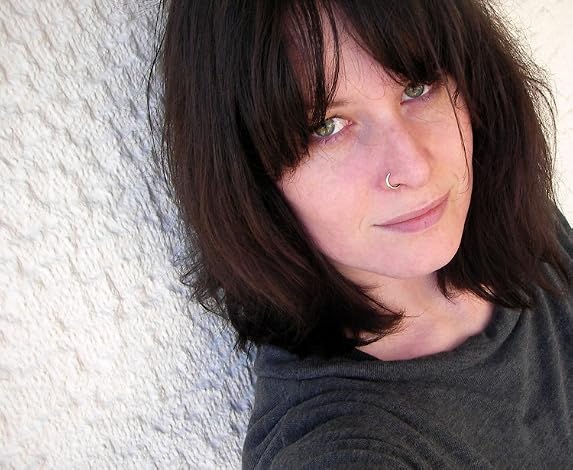
Guest Post - Why Writing is a Form of Personal Therapy by J. L. Lawson
How To Find Your Vital Vocation by Brian Cormack Carr
CHAPTER 2
TALENTS
What you love is what you are gifted at, and there are no exceptions.
~ Barbara Sher
This chapter is action-orientated and is all about finding the key that unlocks your Vital Vocation. It’s where we go in search of your gifts and talents in the sure knowledge that these lie at the root of your ideal work. If you already think you know what they are, great; now’s your chance to verify that. If you don’t, the exercises in this chapter will really help you to unearth them.
Discovering What Makes You Tick
The simplest way to get a hint of where your talents lie is to pay attention to anything that you are attracted to and in particular, anything that you really love.
Even if you don’t have an obvious talent in that area, you can be sure that your love for a thing points you towards a talent of some sort. Perhaps it will be something as simple as the fact that you have a heightened appreciation of the subject in question. Yes, that is a real talent. An expert wine-taster doesn’t need to be able to make wine, but he or she needs to fully appreciate good wine in order to do the job well. A history teacher may never make history, but he or she needs to love learning about it in order to teach it effectively. So it is with you. If you love something, you see it in a particular way: a way that’s utterly unique and therefore very valuable to you, and to others.
In order to cast the net as wide as possible, I’m going to ask you to explore several areas which will provide you with clues as to what you should be doing with your life. In the exercises that follow we’ll be searching for this treasure in:
- Your memories
- Your future plans
- Your imagination
- Other people’s perceptions of you
- Your unconscious mind
Each area is explored in a separate exercise and I’ll give examples from my own life so that you can see how it’s done.
It’s worth giving yourself sufficient time to do each exercise without having to rush through it. By going searching for what you love in each of these areas (the last two are optional) you’ll be able to gather enough information to spot any pattern in the things that are capable of satisfying and stimulating you. Once you can see a pattern like that, you can begin to build a life and career around it.
Ready? Enjoy this. We’re about to do no less than discover your purpose in life!
EXERCISE 3: Journeying into the Past
For this exercise, you’re going to cast your mind back to things you’ve loved doing in your past.
Step 1
Wherever you are just now in your life, think back to several earlier periods, for example:
- Childhood
- Your teenage years
- Young adulthood
- Adulthood
- Middle age
Write each of the periods you’ve chosen as a heading on a separate page and make a list of all the things you really loved to do when you were that age. List as many as you can recall and be as specific as possible.
However – and this is important – only write down the things you particularly loved. Choose things that would rate a 7 or above if you were to rate them on a “lovability scale” of 1 to 10 (with 10 being highest).
![]()
Buy Now @ Amazon & Smashwords
Genre – NonFiction / Careers
Rating – G
More details about the author & the book
Connect with Brian Cormack Carr on Facebook & Twitter
Website http://vitalvocation.com/
The Hunters and the Queen: Element Series (Young Adult Fantasy Romance) @VirginiaVayna

The Hunters and the Queen – Virginia Vayna
Genre – Fantasy, Paranormal, Mythology
Rating – PG
3.8 (4 reviews)
The Hunters and the Queen is a work of fiction in the young adult, fantasy and paranormal romance genres. The story blends elements of romance, darkness, history, fantasy, and reincarnation. The second book in the series, The Gypsy Hunter, has a release date during fall 2013. I hope you enjoy the story. Please come back for more of the journey.~
Description:
The main character, Jolán Vajnbirg, is developing into another being. She has a calling from the sky world. A battle is on the horizon.
While working on her studies at the Churchill Military Academy in Kinsburgh, England, Jolán Vajnbirg’s final year at the academy develops into a year of competition, aristocratic love, reincarnation, and a calling from the sky world to help save earth from the death and destruction caused by the Order of the Hunters.
Jolán Vajnbirg is an often reserved, yet occasionally outspoken young woman living in Kinsburgh, England. She has a relatively easy life living in her quiet England town. She has a full-ride swimming scholarship to the Churchill Military Academy. She has a strong mind, she has an athletic body, and she has a loving family and caring friends.
As Jolán embarks upon her final year at the Academy, her life takes an unexpected turn. She has a quaint encounter with Colemund, the Prince of Gallia Belgica, and the two are literally a universal match created centuries ago. As Jolán begins the last year of her studies, she experiences many changes. She is unaware her future love will develop in to a star-crossed romance.
The sky world is steadily preparing Jolán for her future fate. She will need her friends to help her battle the Order of the Hunters. The hunters have upset the universal balance of earth, and the hunters have upset the sky world.
Jolán will learn about her past, she will learn about reincarnation, and she will understand her responsibilities in the realm. Her relationship with Colemund is no ordinary college love.
An Excerpt from The Hunters and the Queen:
The Phoenix
Hadrian immediately placed an angry phone call to Akuji, but this time she answered her phone. Hadrian sharply inquired, ‘Where are you, Akuji? We have a major problem in development.’ Akuji nonchalantly replied, ‘I just transformed a farmer into a hunter, and I’m explaining the rules.’ Hadrian didn’t care about what Akuji was currently doing at the moment; he violently said, ‘Return to Komi. Do not waste time, do not waste resources, but return on the next flight out of England.’ Akuji said, ‘I still have to finish one more assignment. I need to find and follow this girl named Jolán.’ The mere sound of such a name caused Hadrian’s stomach to turn, and his unnerving sensation returned. Hadrian dryly inquired, ‘Who is Jolán?’ As soon as Hadrian spoke Jolán’s name, he felt his insides turn and his stomach ache. Hadrian felt weak. Akuji said, ‘She is some assignment I have to figure out, but I’m not having any success.’ Hadrian gathered as much strength as he could for the moment, and he said to Akuji, ‘Get on the next flight back to Russia. We have heavy issues of concern we need to assess for action.’ At that moment, Akuji heard several voices come through her phone; but she was unsure what happened or where the voices were located. She asked Hadrian, ‘Are you ok?’ All Akuji could hear was the sound of a thousand whispers. Hadrian kept saying, ‘Akuji, are you there? Answer me.’ Hadrian received no response from Akuji. Hadrian finally hung up the phone, but Akuji still heard the voices. She was caught in a trance for several minutes until she received a piercing headache. Akuji quickly left some items behind for the farmer to study, and she walked towards her car. She hustled to the seat of her car. She was en route to the airport; and she was headed back to Komi. Akuji felt something had changed. She felt a sense of urgency.
Sweet Karoline by Catherine Astolfo
Chapter 1
I met Ethan on the day that I killed Karoline.
Other than a few minor adjustments, I believe that I have handled her murder exceedingly well.
The state of my car, for instance, has become something of a nuisance. Bits of tissue, used napkins, paper cups and pop cans litter the floor at my feet or fly out the window as I drive along. I am invariably subjected to a barrage of honking whenever I reach a red light.
People these days have no patience. They ought to understand that I am busy examining the stray bits in my car. Some of them are works of art. I don't notice the change to green because they are so infinitely interesting.
This study of creative possibilities has become somewhat of an obsession. In the back of my mind I know that all I have to do is clean it up. Yet the thought of actually tackling the onslaught of debris leaves me inert and helpless.
Ethan offered recently to take me to the car wash. He'd help me dump the debris and vacuum the inside, but I have seriously considered the idea that I may be destroying a future Picasso. I have thus far refused his proposition. Not that I have shared my vision of a Picasso with him, of course. I just say that I never have time.
I have acquired a habit of going shopping. I make lists of things in my mind—groceries, toiletries, cosmetics, medicines, vitamins or clothing—that seem absolutely essential to the arrival of tomorrow. But once inside the pharmacy, the clothing store or the shopping center, the bright lights mesmerize me. My eyes blur and I can't for the life of me remember what I have come for.
When I do buy something, I am left vaguely dissatisfied, certain that I could have gotten a better bargain somewhere else had I only looked a little longer. Depressed because I had to use my credit card again and this purchase will become just one more thing to do. Write the check. Buy the stamp. Walk to the post box. Mail the envelope.
The little, unfinished things do sometimes bother me. Dirty laundry is piled up in the closet. The bed is always unmade. In the bathroom, the ceiling is slowly cracking from some unspecified leak that I have failed to report to the superintendent. The drapes in the living room neither open nor close anymore.
At first I tended to watch television all night long, despite the fact that the next day I was a zombie. After I decided to go on an extended sick leave, it didn't matter. I started to sleep all night and all day, never moving unless forced to by some phone call, knock at the door or the call of nature.
I spend hours at the sink. For some reason, the suds and the water are calming. So far I have washed every dish, bowl, and ornament in the apartment two or three times. I reenact advertisements for the latest dishwashing liquid, showing off my lovely long fingers and hands to, well, myself. I speak in a sing-song voice to the imaginary audience, telling them how kind the dishwashing liquid has been to my hands over the years, encouraging them to run right out and buy this product before it disappears from the shelf.
After I've allowed the water to swirl down the drain, I shift to spending hours in front of the little mirror that hangs in my kitchen. People tell me that I am a very beautiful woman. On good days, when I feel haughty and happy, I can gaze into the polished glass and agree with their assessment. On other days, I notice the nose that's a little too upturned. The lips that protrude a bit too much. The dark birthmark above my left eyebrow. The ears that don't lie flat against my head. I have no idea why I am considered flawless, for I have many perceptible flaws, both inside and out.
My father is white and my mother is black with some Native American thrown into her background. My parents have always bragged that I inherited all the great physical features of those races. Their perspective is far less critical than mine. They focus on all the positives. Naturally wavy hair. Large brown eyes with long curling lashes. High, full cheekbones. A small, pert nose. Lips just thick enough to be called luscious.
I am one of those fortunate people who can eat all day and not gain an ounce. Thus I am described as tall and lean as opposed to thin. I have full breasts and a narrow waist. I am a fast runner and good at any sport I attempt. In Hollywood, I am considered full figured.
My skin is a light brown, the color of coffee with cream I guess you would say, that makes me look as though I've just stepped out of a tanning bed. Heads literally turn to stare at me in the street, from across a room, or on the subway. Male and female. To me, it's a constant source of surprise, chagrin and exasperation.
Lots of people, especially women, have jealously told me that I should be grateful for my looks. But I hate being identified as beautiful. Men tend to stare only at my chest when they talk to me. Or they show me off like some trophy and do not bother to ask my opinion on anything. I have been approached in bars and stores alike. Even in this land of plastic enhanced faces, I literally cannot go anywhere without being stared at or even followed. Most people, in fact, are convinced I am a movie star or model. These are not careers I've ever wanted.
I have often been stalked, thus the three sets of locks on our door. Our telephone number is always unlisted and has to be changed once some obsessed man discovers it. When you are lovely on the outside, it's always difficult to entice people to look for the true person underneath. I'm learning through Ethan that it's exactly the same for truly ugly people.

Buy Now @ Amazon
Genre – Psychological Suspense
Rating – 18+
More details about the book
Connect with Catherine Astolfo on Facebook & Twitter
Website http://www.catherineastolfo.com/
Author Interview – Jessica Bell

How did you come up with the title? I wanted something that portrayed exactly what readers were going to get, so it was pretty straightforward from there.
Who designed the cover? Moi.
How do you promote this book? Mainly through social media. Unfortunately I have the disadvantage of being an expat in Greece, so it’s very difficult for me to promote any other way.
Will you write others in this same genre? Of course. This book is just the first of the “Writing in a Nutshell Series”. The next pocket guide is Adverbs & Clichés in a Nutshell: Demonstrated Transitions from Perfectly Atrocious Adverbs, and Dull as Dishwater Clichés, into Gourmet Descriptions
What are your goals as a writer? To have my books linger in the minds of readers long after they’ve turned the last page. With regards to my non-fiction, to help aspiring writers realize that writing doesn’t have to be as overwhelming as it seems. Learn the craft in bite-sized pieces, and eventually everything will come together.
What books have most influenced your life? Housekeeping, by Marilynne Robinson
Cold Blood, by Truman Capote
The Robber Bride, by Margaret Atwood
The Handmaid’s Tale, by Margaret Atwood
The Boy in The Striped Pajamas, by John Boyne
The Private Lives of Pippa Lee, by Rebecca Miller
The Stone Gods, by Jeanette Winterson
Just Kids, by Patti Smith
Short Cuts, by Raymond Carver
Bird by Bird, by Anne Lamott
The Book of Laughter and Forgetting, by Milan Kundera
All poetry by the following poets: Gwen Harwood, Sharon Olds, Anne Sexton, Sylvia Plath
Have you ever considered anyone as a mentor? Oh gosh, if I could ever be mentored by Margaret Atwood, I think my life would be complete!
Who is your favorite author and why? That’s impossible to answer. But I can list my favorite authors. I love these authors because even though some of their work might be considered commercial successes, they are not just entertainers. They truly have something to say:
Marilynne Robinson, Margaret Atwood, Truman Capote, John Boyne, Rebecca Miller, Jeanette Winterson, Patti Smith, Raymond Carver, Anne Lamott, Milan Kundera, Gwen Harwood, Sharon Olds, Anne Sexton, Sylvia Plath
Can we expect any more books from you in the future? Absolutely. I will never stop writing, so I can’t see why I would stop releasing books.
Have you started another book yet? Yes, I’m working on my fourth novel, called White Lady. It’s set in Melbourne, Australia, and is about a young woman named Mia who is fighting fat with white ladies. (Yep, I’ll leave that to your own interpretation for now! Hint: don’t think literally.)
What are your current writing projects now? White Lady, my fourth novel, Adverbs & Clichés in a Nutshell: Demonstrated Transitions from Perfectly Atrocious Adverbs, and Dull as Dishwater Clichés, into Gourmet Descriptions, which is the second in the Writing in a Nutshell series.
Are you reading any interesting books at the moment? I’m reading Finding Fish, a memior by Antwone Quenton Fisher. This is his biography from his website: “Antwone Fisher is an award-winning film and literary writer. Born in an Ohio prison to a teenage mother, Antwone became a ward of the state and was placed in foster care. He spent two years in a loving foster home, but was subsequently moved and suffered twelve years of abuse at the hands of his new foster family.”
What are some of the best tools available today for writers, especially those just starting out? Definitely blogging, and all sorts of social media. Some excellent community websites to look into are:
http://www.wow-womenonwriting.com/
http://www.worldliterarycafe.com/
Buy Now @ Amazon
Genre – Non-Fiction / Writing Skills Reference
Rating – PG
More details about the author & the book
Author Interview – Dermot Davis
You’re also a playwright?
Yes, my background is in theatre and aside from some early poetry and short stories, plays were the first real writings I attempted.
How does the experience of writing a play differ from that of writing a novel?
For me, they pose a very different set of challenges. The limitations involved in writing a play are very strict and confining and can be very difficult to adhere to or overcome. In a play, the entire action is taking place in real time and although you can play around with creative lighting, scene changes, blocking and so on, so much is dependent on the dialogue itself. Mostly everything has to be conveyed through believable dialogue between the characters on stage and only one person can speak at a time. The number of characters you can put on a stage at any one time tends to determine what can happen in a scene.
Having said that, it’s also very true that knowing and working within the limitations can be very freeing and can very much improve the work. Dialogue has to be economical and very, very precise, for instance.
And writing the novel?
Writing the novel is almost like going to the other extreme where there are unlimitless possibilities. You can write for a cast of thousands, travel back and forth around the world and through time itself and you have the opportunity of allowing your characters to speak pages and pages about their inner-most thoughts. It’s wonderful.
You enjoy writing having in a medium that has less limitations, then?
Yes and no. They are both just different beasts, really. The dangers of having too few limitations are that, in the novel, for instance, I can write pages about something that really doesn’t serve the characters or the plot but I’m so in love with my writing that I find it hard to curb myself. That happens a lot and a good editor should be able to spot those areas and respectfully run a red pen through them (laughs). A really strict editor is a writer’s godsend, to be honest.
Do you have an organized process or tips for writing well? Do you have a writing schedule?
I don’t write to a schedule usually but I do try to write every day that I’m working on a project. Some days I could write lots and other days very little but I try not to force myself to write if the story isn’t flowing. Usually when I find myself slowing down, on further analysis, I discover within myself that I’ve come to some kind of resistance in the writing and it serves me to stop and take a closer look at what that might be.
How do you do that? What kind of resistances are you concerned about?
Resistances come in many flavors and can be very hard to ascertain. It can require some deep introspection but doing so usually pays dividends so I try to stay as aware and alert to them as I can because if I don’t, ultimately the work can suffer. Sometimes, it’s just a question that I have been working too much at the expense of play or relaxation and the playful part of myself feels restless and maybe a little cheated. A simple remedy would be to take some time off and go to the beach or do something fun. A more serious kind of resistance could indicate that I’ve lost my way in the story or rather that I’ve strayed from the truth in some way. Maybe I’m forcing the characters to follow some plotting that I want to have happen and it’s not being respectful to the characters and may come across in the read as being false.
Explain how following a plot can be disrespectful to the characters of the story? Are you suggesting that in some way the characters that you have created have opinions and feelings so that they may feel “disrespected” in some way?
(smiles) Yes, that’s exactly what I’m suggesting. One of the keys for me when writing characters is getting to that point when the characters in the story have, in some sense, taken on a life of their own, almost as if they have become real people in my head and on the page. When that starts to happen, I know that I am writing a story that has life in it; a passion or perhaps an integrity… which is very hard to define. When I’m writing a story and I don’t reach that point where the characters have become real, then I know that the story is not as good as it can be and a reader won’t be as engaged as when the characters have more… dimensionality, is perhaps a good description to use.
Do the characters then have “feelings”? I’m trying to understand how some imaginary characters that you have made up can feel “disrespected?”
I don’t know how common this is among writers, it’s not something that I have discussed a lot but one thing that I noticed from an early point in my writing is that in a lot or if not in most of my stories, it’s the characters – yes, that I have created – have told me what the story is and how things would naturally unfold given the character traits and combination of characters that are interacting in the story. Despite the fact that I’m following a plot outline of where I think the story should go, when I try to write my characters to follow that plot, they offer resistance as if they are telling me that what I wanted them to do was actually going against their character and not something that they would do in that situation. To continue to do so, would then feel to me like I was forcing the story. If I’m being sensitive to my characters, then I change the plot or rather have them tell me what the plot should be.
Martin is a content twenty-four year old single guy whose peace is disturbed when he receives a wedding invitation from his ex-girlfriend with whom he still pines for.
Does he go?
He considers that if he doesn’t go to the wedding, he will be perceived as a sadsack loser.
If he goes alone he’ll be perceived as an even worse loser.
However, if he attends the wedding with a drop-dead gorgeous bombshell who looks like she’s crazy about him, then it’s his ex-girlfriend that’s going to look like the loser.
Problem is he’s not dating a drop-dead gorgeous bombshell.
He’s got three weeks.
After many disastrous online initiated dates, he finally does get to meet a gorgeous bombshell who agrees to attend the wedding with him.
Problem is, not only is she fourteen years his senior, but she’s all about putting Zen into relationship, which involves every guy’s worst nightmare: talking about your feelings, being conscious of your thoughts and above all, unabashed, honest communication at all times.
Martin has no idea what he is getting himself into and the sharp learning curve that’s required of him when all he wants is sex and she wants Zen.
Buy Now @ Amazon
Genre - Romance
Rating – PG13
More details about the author and the book
Connect with Dermot Davis on Facebook, Twitter and Goodreads
Website www.dermotdavis.com